
Written By: Alon Vamos, Agronomist, Data Ingestion & Ontology Team Lead
I have spent the last years planning and building the agmatix ontology and controlled vocabulary, following the guidelines of ISO 25964.
In short, here is a summary of my experience, and the benefits of the ISO guidelines:
- You build an ontology that’s clear, unambiguous, and well-structured, irrespective of who uses it (data engineers, agronomists, researchers, external collaborators).
- The ontology is sustainable and maintainable — easier to update when new crops, practices or environmental metrics are added.
- It is interoperable — you can map to external vocabularies (soil taxonomies, climate standards, crop codes) and integrate with external data sources or systems.
- It will support multi-stakeholder usage, which is useful if you collaborate with partners in different countries or languages.
For a company operating in agriculture, input companies, F&B and research — these qualities are especially valuable because the domain is complex, evolving, and often involves data exchange with external stakeholders.
So, What Are The ISO 25964 Guidelines?
When designing a controlled vocabulary using ISO 25964, concepts are defined as the core units of meaning, with terms serving only as their linguistic labels. Each concept is assigned one preferred term per language, along with any non-preferred synonyms, ensuring consistent usage while still supporting natural language variation. Concepts are structured using formal semantic relationships — primarily hierarchical (broader/narrower), associative (related), and equivalence — allowing the vocabulary to reflect real-world domain logic. Term-level relationships complement this by linking synonyms, variants, and alternative spellings back to the preferred label. By separating conceptual meaning from vocabulary expression, ISO 25964 supports clarity, multilingual alignment, information retrieval, and interoperability with other thesauri or ontologies. Designing a robust and effective controlled vocabulary hinges on the rigorous methodology prescribed by standards like ISO 25964, which fundamentally separates the concept from its linguistic term. This distinction is paramount: concepts are the enduring, core units of meaning within a domain, while terms are merely the transient linguistic labels used to express them.
Structuring Semantic Relationships
The power of an ISO 25964-compliant vocabulary lies in its structured network of relationships, which mirror the logical connections in the real-world domain:
- Formal Semantic Relationships (Concept-Level): These relationships structure the entire conceptual space, providing navigation and logical integrity.
- Hierarchical Relationships (Broader/Narrower): These define the “is-a” or “part-of” relationships, establishing a clear structure from general to specific (e.g., Fruit is broader than Apple; Engine is part of Car). This structure facilitates scope expansion or narrowing during searches.
- Associative Relationships (Related Term): These link concepts that are related but not hierarchically connected (e.g., Farmer is associated with Tractor). These relationships guide users to potentially relevant concepts.
- Equivalence Relationships (Use/Used For): These define the relationship between the preferred term and all its non-preferred variants, formalizing the concept-to-term mapping.
- Term-Level Relationships (Linguistic Support):
These relationships operate at the label level to manage linguistic variations:- They link synonyms, inflectional variants, alternative spellings (e.g., color and colour), and common acronyms back to the chosen preferred label.
Benefits for Information Management
By strictly separating conceptual meaning from its linguistic expression, the ISO 25964 standard delivers significant advantages:
- Clarity and Consistency: It eliminates ambiguity by ensuring that a single, clear meaning (concept) is consistently represented by a single preferred term, regardless of the variety of terms that might be used by end-users.
- Multilingual Alignment: It is intrinsically designed for multilingual environments. The core concepts remain language-independent, while different language-specific term sets (preferred and non-preferred) are mapped to them, simplifying translation and cross-language information retrieval.
- Enhanced Information Retrieval: The structured relationships and concept-based indexing dramatically improve both the precision (finding highly relevant items) and the recall (finding all relevant items) of information searches.
- Interoperability: By adhering to a recognized standard, the controlled vocabulary or thesaurus can be more easily mapped, integrated, or aligned with other existing thesauri, taxonomies, or formal ontologies, thereby fostering semantic interoperability across systems and organizations.
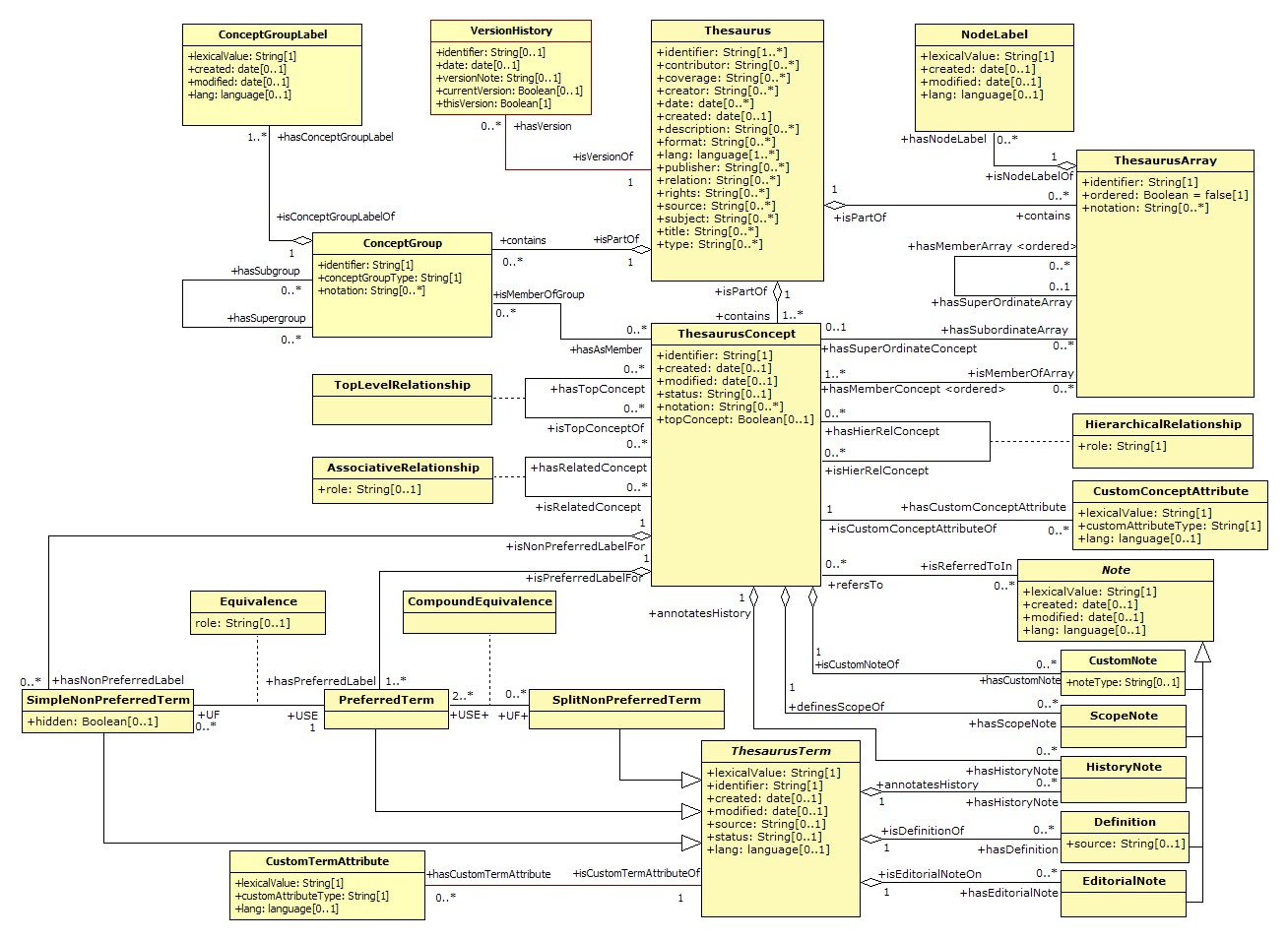
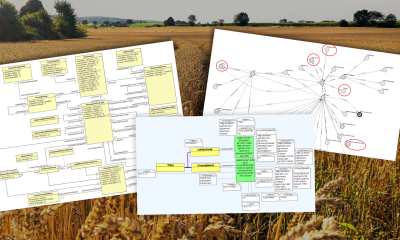
Image 1: Illustration of general concept representation in the official document of ISO 25964
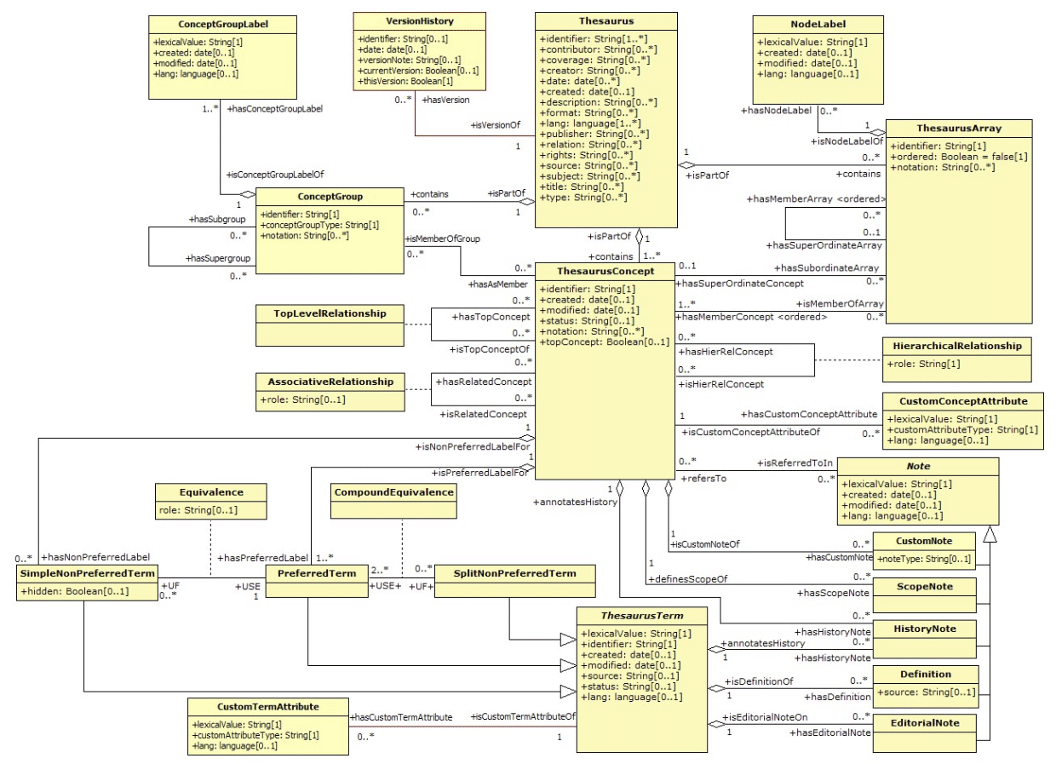
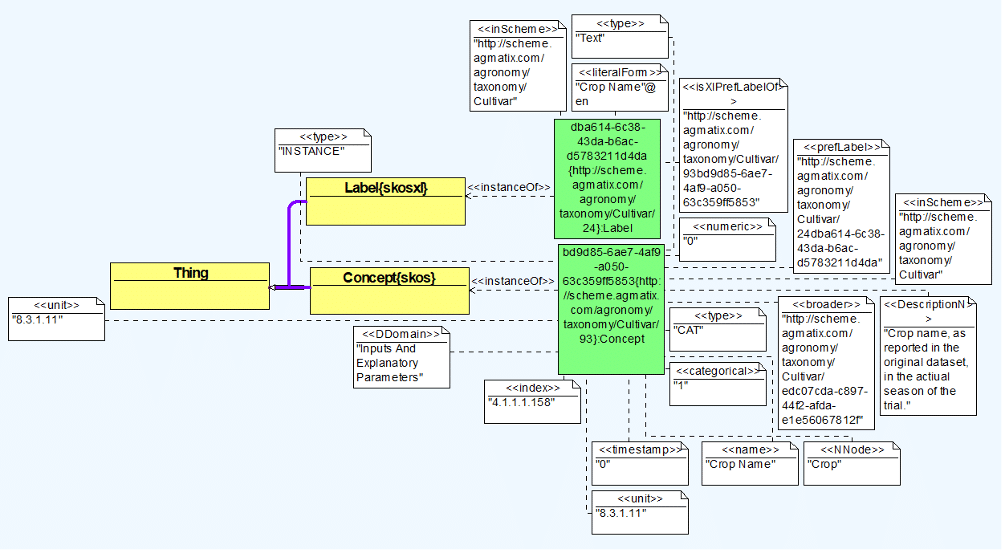
Image 2: Illustration of the Concept crop in Agmatix controlled vocabulary and ontology model
My Personal Touch
From my personal experience, when building an ontology or controlled vocabulary under ISO 25964, keep these core principles and practices in mind:
- Be clear about “concepts” vs “terms/labels”
- Make distinctions between concepts (the abstract ideas or categories) and terms (the words/labels used to represent them).
- For each concept, designate a preferred term and optionally any number of synonyms / non-preferred terms.
This separation helps avoid ambiguity (same word used for different concepts, or multiple words for same concept) — key in domains like agriculture, where different stakeholders may use different terms for the same concept (e.g. “soil moisture,” “soil humidity,” “water content”).
- Define clear concept relationships and vocabulary structure
- Employ standard relationships—such as broader term (BT), narrower term (NT), related term (RT), and equivalence (synonymy)—but always establish these as connections between concepts, rather than merely between term-strings.
- When designing your domain model, such as for agricultural practices or environmental parameters, it is crucial to carefully consider three main aspects:
- Hierarchical Structures: Define relationships where concepts progress from general to specific (e.g., “Crop” includes “Cereal,” which includes “Wheat”).
- Associative Relationships: Identify connections between different concepts (e.g., how “Soil type” is related to “Fertility class”).
- Equivalences and Synonyms: Account for different terms used across various languages or disciplines to represent the same concept.
- Documentation, management and maintenance practices
- Develop a thesaurus data model to systematically represent all concepts. This model should include preferred terms, synonyms, relationships, scope notes (or definitions), and identifiers.
- Ongoing maintenance is crucial for your vocabulary, as emphasized by ISO 25964. You must plan for versioning, updates, and maintenance because your vocabulary will need to adapt as your organization and domain evolve to include new crops, practices, environmental parameters, and research methods.
- Interoperability and mapping to other vocabularies/ontologies
- ISO 25964 Part 2, focusing on Interoperability, offers guidelines for mapping between different vocabularies or ontologies. Specifically, it recommends defining mappings from external vocabularies (such as soil taxonomy, climate code lists, or crop classifications) to your own concepts to ensure system interoperability.
- To maximize value and future-proof your ontology, design it for interoperability with other systems and vocabularies. This includes compatibility with resources such as research databases, environmental datasets, and regulatory taxonomies.
I hope these selected points help other professionals in the process of designing and creating an enterprise structured ontology.
The CPCN Case Study
Over the course of a large-scale data harmonization initiative, I was responsible for integrating more than eighty heterogeneous agricultural research datasets originating from independent experiments across multiple countries. Although the studies shared broad thematic elements—such as fertilizer treatments, crop species, varietal selection, and environmental conditions—the datasets reflected extensive variation in structure, terminology, measurement systems, and experimental methodologies. Each contributor employed localized taxonomies, domain-specific nomenclature, and diverse linguistic conventions. Units of measure were inconsistent across reports, and variable naming conventions lacked a unified schema, making direct comparison and aggregation unfeasible in their raw form.
My primary objective was to transform this fragmented collection of legacy data into a harmonized, analysis-ready resource. To achieve this, I designed and executed a comprehensive data standardization workflow. This included normalization of terminology through controlled vocabularies, mapping non-standard terms to shared reference concepts, and developing crosswalks between disjoint classifications of crops, inputs, and environmental parameters. I applied unit-conversion protocols to resolve discrepancies in measurement scales, standardized temporal and spatial metadata, and introduced quality checks to validate completeness and consistency.
Additionally, I enriched the datasets by integrating external ontological resources and scientific taxonomies, enabling semantic alignment across experiments. Metadata descriptors were enhanced to support discoverability, interoperability, and downstream machine-driven reasoning. Through iterative refinement, I produced a unified knowledge layer that allowed experiments once isolated by regional terminology and divergent methodologies to be meaningfully compared, queried, and analyzed at scale.
Hierarchical relations (BT/NT) helped structure fertilizer types into broader nutrient categories such as N-based, P-based, compound NPK, or organic amendments, enabling the dataset to support high-level meta-analysis without losing fine-grained detail. Associative relationships were then used to connect fertilizers to related agricultural practices — for example, linking gypsum application to salinity management, or controlled-release nitrogen to water-saving irrigation protocols. This allowed practices to be analysed not only individually, but as interdependent agronomic strategies, which is essential for real-world experimental insight.
By organizing fertilizers, treatments, and management operations through ISO 25964-aligned vocabularies, the harmonized dataset gained semantic clarity, multilingual compatibility, and query-friendly structure. As a result, experiments that once appeared unrelated could be grouped, compared, and analyzed at scale — contributing directly to the quality and usability of the final knowledge asset.
The resulting harmonized dataset now supports cross-study analytical workflows, meta-analysis, and machine learning applications, enabling researchers to extract broader insights into agronomic performance, environmental response, and treatment effectiveness. This project demonstrates the impact of structured data engineering—transforming fragmented experimental records into interoperable, high-value scientific knowledge.
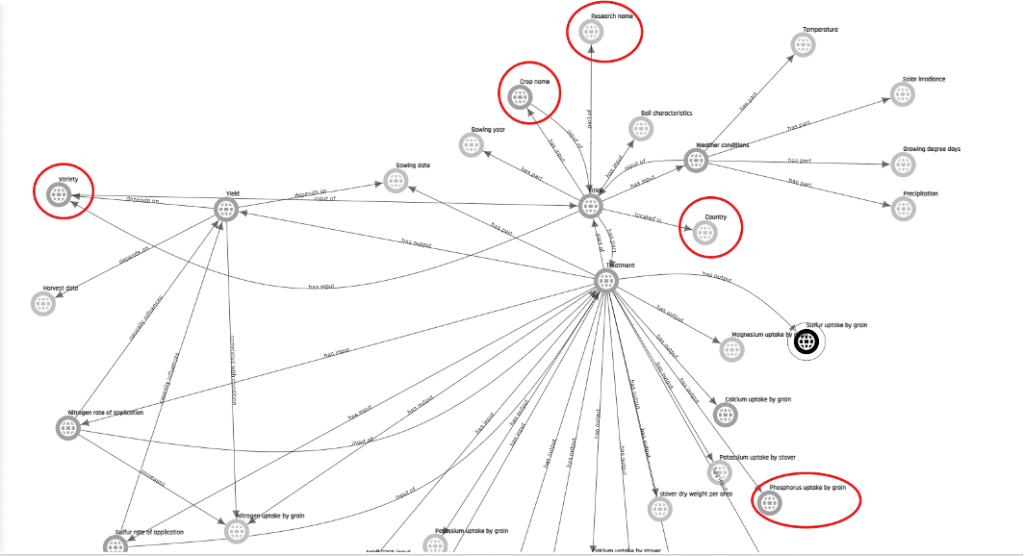
Recognizing concepts and their relations, “sinks” and “junctions” that connect concepts from different taxonomies to enhance the analytic capability and data interoperability.
Image 3: A snapshot from the semantic representation visualization, done in graphologi platform.